Bracing winds, bitter cold and sluicing rains- for an eternity all terrestrial life has had to protect themselves from the fearsome elements. As a species with little to no natural protection, sacrificing body hair for sweat, our best option is taking refuge in shelters. But when shelter is unavailable, what is left to defend us against the brutalities of weather? Waterproof garments have existed in many forms throughout human history and have only improved over time.
In northern Europe wool is a mainstay in outerwear, it’s easily spun, naturally water resistant and retains heat extremely well. In the 1500s wool Garberdines were used by English common folk as defence against rain and snow. These heavy cloaks were effective but due to their weight were unwieldy and restricted movement, providing warmth and protection at the expense of movement.
However in the Americas, indigenous people were much further ahead of the game.
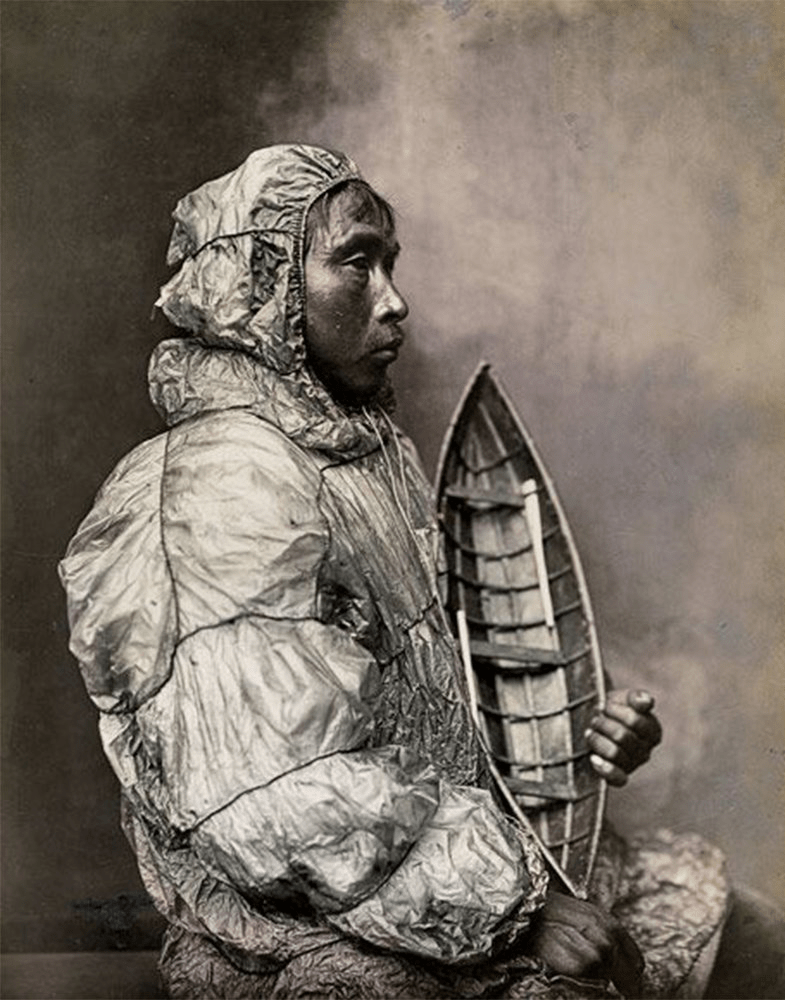
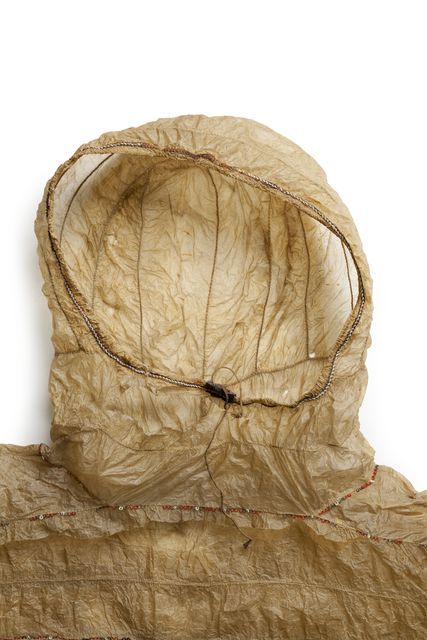
Northern indigenous tribes, like the Caribou Inuits, have been fashioning waterproof outer layers called Kamleikas (known as Anoraks in the West) for centuries. The waist-length jackets were made from the viscera of aquatic mammals such as the Walrus. These innards were, of course, completely waterproof, yet flexible and lightweight enough to be used on long canoeing expeditions without sacrificing vital mobility, allowing for more effective hunting and fishing. They were sewn together with either grass or sinew which would expand when wet, sealing the punctures in the fabric, almost like an early form of taped seams.

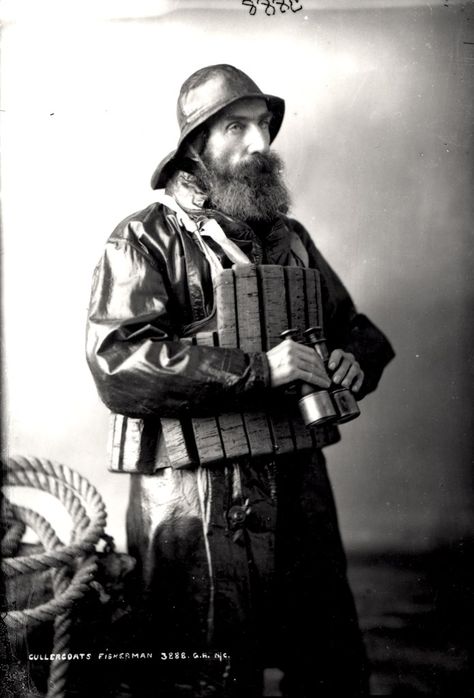
Fishing for food is obviously not exclusive to Native American tribes though and in the western world there were ways to resist similar conditions. Scottish fisherman had discovered that by coating sailcloth with linseed oil the longevity of the sails increased. When linseed oil is boiled, it’s structure changes and it solidifies, coating and waterproofing fabric by filling the pores in the weave, creating a barrier against water. Eventually the process was applied to garments known as “Oilskins”. As the linseed oil went rancid it turned yellow, this natural degradation became so synonymous with waterproof jackets that the yellow raincoat has become an iconic fashion piece.
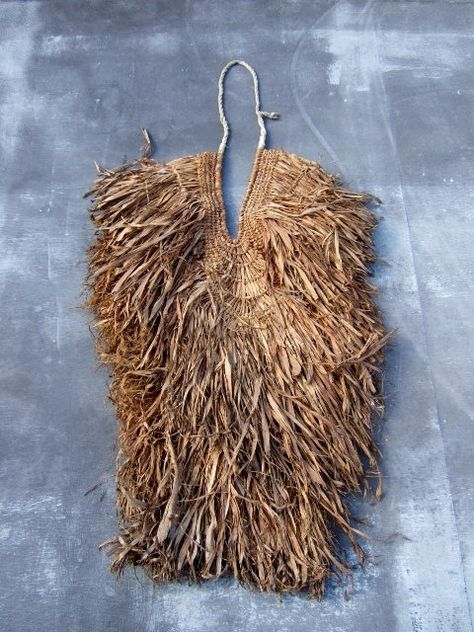
Unfortunately not all traditional efforts have been as influential. In Japan, Korea and China it was common for waterproof cloaks to be made from rice stalks, similar to western thatch. More of a wearable shelter than a garment- these bulky, cumbersome and flammable cloaks, known as Mino, were phased out rather quickly once other technologies were introduced to the region and are only used ceremonially now.
In South America many Amazonian tribes were using latex, the sap of the rubber tree, to coat their clothes to protect themselves from the thunderous Rainforest downpours. The material piqued the interest of European colonisers but wasn’t widely used in garments until Charles Macintosh found that he could use Giovanni Fabbroni’s technique of dissolving rubber with naphtha to create a waterproof jacket. The Mackintosh is waterproofed by taking the rubber/naphtha mixture and sandwiching it between two layers of cotton, this is generally accepted as the first fully waterproofed jacket. Due to naphtha’s extreme flammability this method wasn’t used by many others except Macintosh. However, the discovery of Vulcanisation , the process of strengthening rubber by mixing it with sulphur, in 1839 by Charles Goodyear really pushed forward the use of rubber as a way of staving off the rain, especially for fisherman in Northern Europe where the classic rubber raincoat is most commonly associated.
In the 19th century Thomas Burberry invented a material known as Garbadine, this was an extremely tightly knit cotton twill that was sealed with lanolin, or “sheep’s wax”. It is widely thought that Burberry appropriated the technology from Aquascutum but used cotton instead of Aquascutum’s wool. Regardless of the opposing history of the two brands both were employed by the British armed forces during WW1 due to their robust construction and lightweight.
The 20th century is known for rapid technological advancements, with the occurrence of WW2 and the Cold War following that, there was high demand for robust, hard wearing textiles. One example of this was the creation of Ventile. In 1943 this material was developed in response to the increase in fighter pilots battling over bodies of water, it was necessary that a material was cool and lightweight in the cockpit but was waterproof and warm once outside the cockpit (namely in the sea). The material is constructed from cotton, largely due to flax shortages in war-torn Britain, with extra long staple fibres. Longer fibres allowed the yarn produced to be stronger and needed fewer twists, making it stronger than standard cotton, that was tear resistant and less susceptible to burning. The fibres in Ventile would be relaxed enough to allow air to pass through when dry but would expand when wet creating a near-waterproof barrier (in a similar way to how the sinew threads would seal a Kamleika), this impressive versatility marks the material as a precursor to more advanced materials developed later in the century. While largely replaced in military use, due to it’s comparable silence to synthetic materials it is widely used in bushcraft such as hunting and birdwatching by civilians.
The name GORE-TEX demands respect in the world of waterproofing- as a material few come close to the level of protection that it provides. What makes it so utterly fantastic is that the pores found in the material are the perfect size, small enough that water droplets cannot penetrate the material but large enough to allow water vapour to escape. This unique property made it “breathable”, allowing the wearer to sweat and remain comfortable, but still be defended against the weather outside. With the companies ties to NASA the material was in high demand, being used in spacesuits and military gear. The increased use has obviously decreased price and is now available to consumers, albeit in high end garments.
GORE-TEX was created by Robert Gore, the son of former DuPont engineer Bill Gore. DuPont is crucial to the discovery of GORE-TEX due to the companies experimentation with textiles. In the early 1900s they were responsible for the creation of both Rayon and Nylon, textiles still widely used today. Their most relevant discovery however was Polytetrafluoroethylene (PTFE), more commonly known as Teflon. Teflon was used domestically in non stick pans due it’s lightweight and resistance to oil and water, which was then developed further by Bill when he discovered PTFE could be processed into sheets. Gore left DuPont and founded W. Gore and Associates where he created wiring insulation out of PTFE, which got the attention of NASA, due to it’s impressive flexibility, strength and, of course, high water resistance. This became the bread and butter of the company and PTFE was endlessly experimented with in the research facility. In one of Robert’s experiments, he found that when heated rods of the material were pulled on they would become brittle and snap, but when he quickly “jerked” the rods, it would split into a fibre that could be weaved. This is what we now know as GORE-TEX.
Human ingenuity will always be rewarded and I think that as waterproof garments are so commonly associated with the ideals of discovery and exploration, it seems fitting that a brand as experimental as W. Gore and Associates were responsible for such an innovative textile.
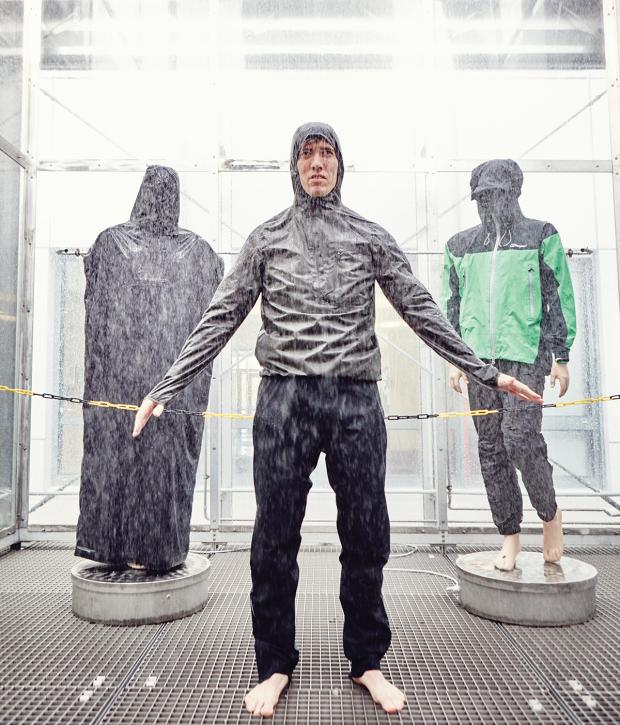
On the topic of experimentation, it would be sacrilege to not mention Massimo Osti. By far one of the most respected names in activewear, his constant innovation with C.P Company and Stone Island has created a vast archive of some of the most bizarrely advanced garments imaginable. Weaving rubber, or even stainless steel directly into fabrics, his approach to outdoor wear was nothing short of revolutionary. Yet most of his inspiration came from the military use of materials. The first garment he made was from surplus military canvas, that was too rigid and uncomfortable but once stone washed numerous times retained it’s desirable characteristics but became soft and malleable enough to be considered for garments.
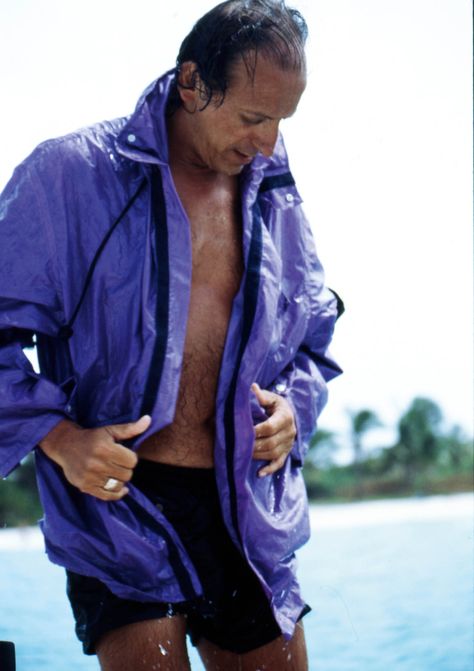
The brand’s breakout success came from their Ice jackets which were covered in a temperature sensitive coating that changed colour in response to temperature changes. This was not born from necessity, a purely aesthetic choice, it showed that while in the past extremely technical garments were reserved for the military, Osti’s fascination with technology and clothing bridged the gap between experimental fashion and functionality together and made it available to the masses. A scout for the curious with an eye for aesthetics, without him fashion as a whole wouldn’t be the same.
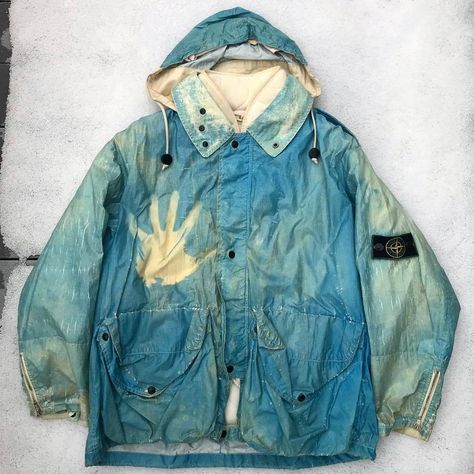
With the recent rise in popularity of outdoor-wear in mainstream fashion, ranging from Errolson Hugh’s ACRONYM and it’s high tech, futuristic aesthetic, new age hippies clamouring for vintage Patagonia or collaborations between avant-garde brand Sacai and the North Face, an aesthetic that was formerly reserved for oddballs and weekend hikers has been given a new lease on life.
Personally I believe that as a generation that has been faced with the potential collapse of the climate surrounding us it’s no surprise that there has been a fresh interest in clothing that allows us to spend what little time we have left with our gorgeous environment, as well as outdoor activity being an effective tonic for the endless, fast pace of the social media era.
 r.faron